Renewed Practitioner
For dietitians, nurses & health coaches
Anytime, anywhere learning
A Practical Skill for Person-Centered Care
Mattering
You hear the story. Learn how to bring what matters into care.
When patients share feeling alone, finding purpose, or wondering whether they matter, how do you respond?
Build on your listening and counseling skills with a practical framework for recognizing what makes someone feel valued, connected, and able to contribute—and bringing that understanding into the care you plan together.
Introductory offer: $20 · Regularly $30
Prerecorded video • Personal reflection • Two clinical case scenarios
A starting point for more attentive, person-centered care

Move from hearing the story to using it in care.
When a patient shares that they feel alone, lack a sense of purpose, or wonder whether they matter, you have an opportunity to understand what supports their life and to reflect a healing attitude toward them. This course helps you explore those insights and connect them with the care you plan together.
Mattering is a two-way street.
We need to feel valued. We also need to recognize that what we offer matters.
“I am important. What I contribute has value.”
Mattering invites us to notice where patients experience connection and purpose—and where those experiences may be missing.
Health is more than a ladder.
Health is often pictured as a climb from poor health to good health. The garden metaphor offers a broader view.
Physical care, emotional well-being, relationships, and spiritual or existential meaning are interconnected. A person can experience purpose, connection, and opportunities to contribute even while living with illness.
Recognizing these dimensions helps us bring more of the person into care.
Your practical framework for Mattering in Clinical Care: M = C⁴
Communicate that the person matters through your attention, listening, and response.
Explore purpose, the sacred or transcendent, and a legacy beyond oneself, following the patient’s own language and beliefs.
Explore relationships and groups where the person feels valued and contributes value—from close relationships to work, neighborhood, faith communities, or volunteering.
Bring relevant insights into collaborative care and appropriate documentation within your professional scope.
Watch. Reflect. Apply.
Watch. Reflect. Apply.
View the prerecorded video exploring mattering and the garden metaphor for whole-person health. Pause and revisit the content on your own schedule.
Reflect personally
Consider what matters most to you as a person and a clinician. Explore your own experiences of value, connection, contribution, and meaning.
Your personal reflections aren't shared.
Practice with Jordan and Alex
Meet Jordan, whose story reflects meaningful sources of mattering, and Alex, whose story reveals low mattering.
Complete three reflection questions for each case to practice recognizing patient needs, responding with attentive presence, and bringing relevant insights into care.
Then check your understanding with a 10-question course quiz.
What you will practice
Recognizing signs of mattering in a patient’s story.
Responding with acknowledgment and open-ended questions.
Exploring connection, contribution, meaning, and spirituality.
Connecting these insights with patient priorities and collaborative care.
Capturing relevant information within your professional scope.
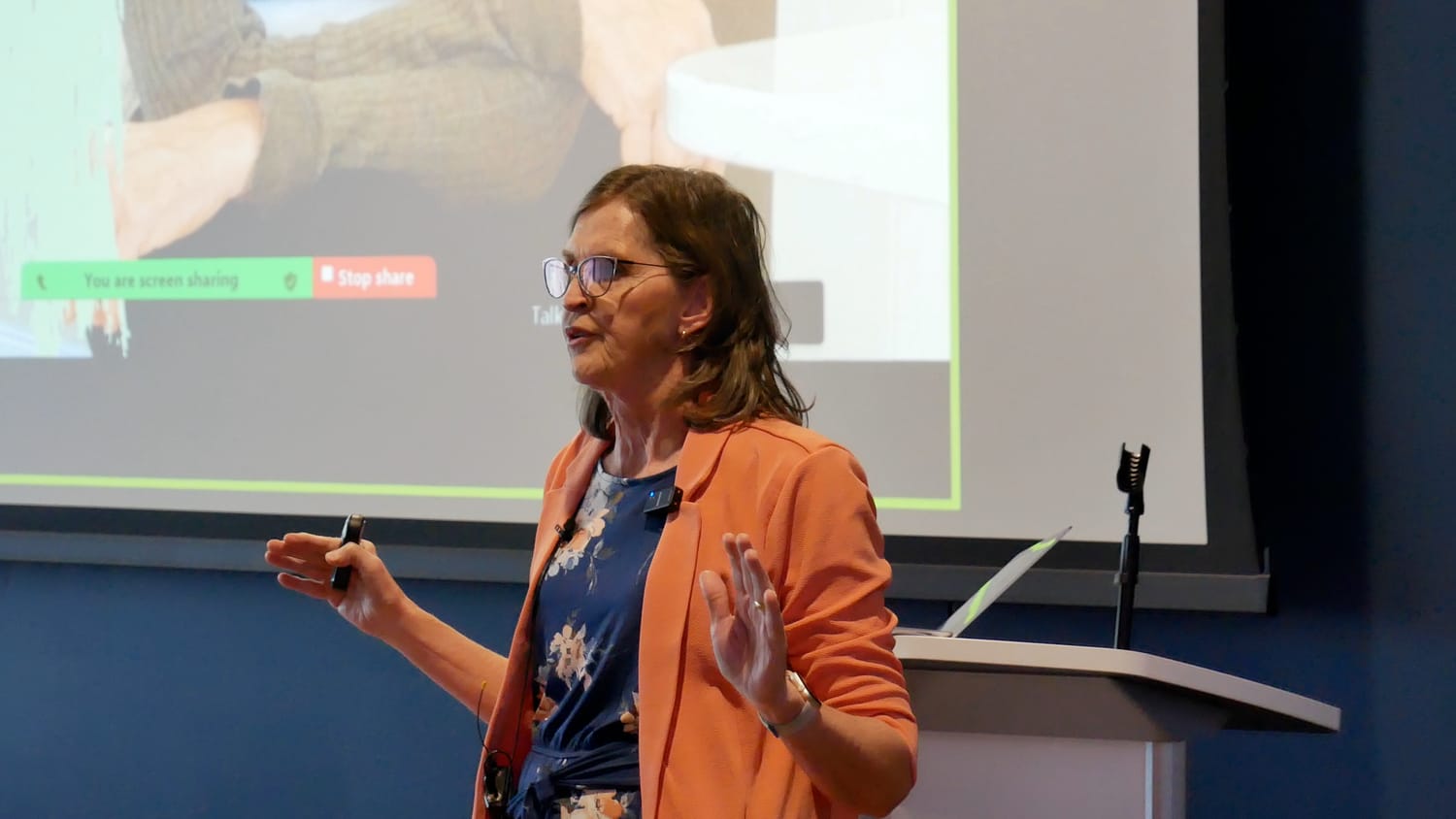
Learn with Mary Gannon Kaufmann
MS, RDN, MA, BCC
Registered Dietitian Nutritionist
Board Certified Healthcare Chaplain
Mary brings experience in nutrition and healthcare chaplaincy to practical education that helps clinicians recognize and respond to the human dimensions of care.

A few questions before you begin
This course is designed for dietitians, nurses, health coaches, and even health care chaplains. Apply the framework within your professional role and setting.
No. The course welcomes religious, spiritual, and nonreligious perspectives. You will learn to follow each patient’s beliefs, values, and sources of meaning, and you may even deepen your own.
Yes. It complements listening and counseling skills by helping you explore experiences of value, connection, contribution, and meaning—and consider how those insights belong in care.
No. Watch the prerecorded lesson and complete the reflections, case activities, and quiz on your own schedule.
No. Your personal reflection may remain private.
Bring what matters into your next conversation.
Start with attentive presence. Recognize sources of mattering. Practice bringing that understanding into person-centered care.
Introductory tuition: $20
Regularly $30 · Save $10
Built with ©systeme.io